

Best Espresso Machine Cleaners & Descalers (2026)
By Juan Carlos Sosa (@thecoffeejuan) | Boquete Coffee Traders
The fastest way to ruin a great coffee is a dirty machine. Rancid coffee oils in the group head and limescale in the boiler will make even the freshest beans taste bitter and flat — and scale is the number one killer of home espresso machines. The right espresso machine cleaner and descaler costs a few dollars, takes minutes to use, and protects a machine worth hundreds. Below are the six cleaning and descaling products I trust, matched to what they clean — backflush detergent, descaler, milk system cleaner, grinder tablets and a group head brush — plus the exact schedule that keeps a machine pulling like new. Already have your prep gear sorted? This pairs with my guide to the best espresso accessories, which covers tampers, WDT tools and baskets.
IN A HURRY? OUR TOP PICKS
- Best overall: Urnex Cafiza Cleaning Tablets — the industry-standard backflush cleaner every machine owner needs.
- Best descaler: Urnex Dezcal Descaler — safe, citric-acid-based scale removal for any machine.
- Best for super-automatics: De'Longhi EcoDecalk — the manufacturer-approved descaler for bean-to-cup machines.
- Best for milk systems: Urnex Rinza Milk Frother Cleaner — dissolves milk residue in steam wands and frothers.
- Best for grinders: Urnex Grindz Grinder Tablets — cleans burrs without disassembly.
- Best brush: Pallo Coffeetool Group Head Brush — the daily 10-second scrub that prevents buildup.
ON THIS PAGE
Best espresso machine cleaners and descalers at a glance
| Product | Type | Cleans | How often | Price |
|---|---|---|---|---|
| Urnex Cafiza Tablets | Backflush detergent | Group head, portafilter, baskets | Weekly | $ |
| Urnex Dezcal | Descaler (citric acid) | Boiler, water paths | Every 1–3 months | $ |
| De'Longhi EcoDecalk | Descaler (lactic acid) | Super-automatic water systems | When the machine prompts | $$ |
| Urnex Rinza | Milk system cleaner | Steam wands, frothers, pitchers | Weekly | $ |
| Urnex Grindz | Grinder cleaning tablets | Burrs and grind chamber | Monthly | $ |
| Pallo Coffeetool Brush | Group head brush | Group head gasket and screen | Daily | $ |
Cleaning vs descaling: why your espresso machine needs both
These are two different problems, and most people only fight one of them. Cleaning removes coffee oils. Every shot leaves a film of oil in the group head, screen and portafilter; within days it oxidizes and turns rancid, and every shot after that passes through it. If your espresso has slowly turned bitter and ashy no matter which beans you buy, this is almost always why.
Descaling removes limescale — the mineral deposits that hard water leaves inside the boiler and water paths. Scale narrows the pipes, wrecks temperature stability, slows the pump, and is the leading cause of dead machines. It builds silently: by the time flow visibly slows, there is already a serious layer inside. How fast it builds depends entirely on your water, which is one more reason the water you brew with matters as much as the machine.
A good maintenance kit attacks both: an alkaline detergent like Cafiza for the oils, an acid descaler like Dezcal for the minerals. They are not interchangeable — and household vinegar is a poor substitute for either, as I cover in the FAQ.
The six best espresso machine cleaners and descalers
1. Urnex Cafiza Espresso Machine Cleaning Tablets

The industry standard, full stop — walk into any specialty cafe and this is what the closing barista is using. Drop one tablet into a blind (blank) basket, run a few backflush cycles, and Cafiza dissolves the rancid coffee oils that plain water leaves behind in the group head and three-way valve. The difference in the cup after the first proper backflush of a neglected machine is genuinely startling: brightness and sweetness come back that you had blamed on the beans. Tablets are pre-dosed so there is no measuring, and one jar lasts the better part of a year of weekly cleaning. Note it needs a machine with a three-way valve (most semi-automatics); for machines without one, soak the portafilter and baskets in a Cafiza solution instead.
Type: backflush detergent tablets | Use: weekly, with a blind basket | Best for: Every semi-automatic espresso machine
Check price on Amazon →2. Urnex Dezcal Activated Descaler
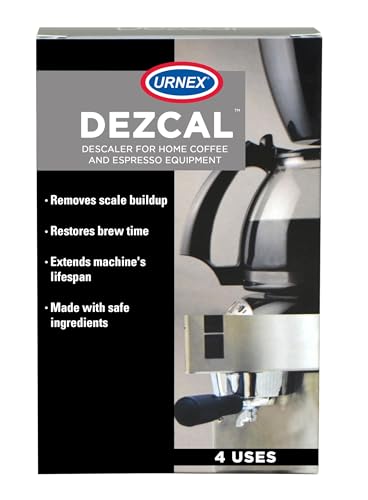
The descaling counterpart to Cafiza and the one I recommend for any machine whose manufacturer does not mandate its own solution. Dezcal is a citric-acid-based powder that dissolves limescale from boilers, heating elements and water lines without the harshness or lingering smell of vinegar, and it is safe on brass, stainless and aluminum internals. Dissolve a packet in the tank, run it through, then flush thoroughly with fresh water. Do it on schedule and your machine heats evenly, flows freely, and simply lasts — skip it and scale will quietly do more damage than every other mistake combined.
Type: citric-acid descaling powder | Use: every 1–3 months depending on water hardness | Best for: Espresso machines, kettles and drip brewers alike
Check price on Amazon →3. De'Longhi EcoDecalk Descaler

If you own a bean-to-cup machine, use the descaler it was engineered for. EcoDecalk is De'Longhi's plant-based, lactic-acid solution, and it is what the descale light on a Magnifica or Dinamica is asking for. Super-automatics have more sensors, valves and narrow water paths than a manual machine, and using the manufacturer-approved solution keeps the warranty intact and the internals happy — the machine's own descale program does the work, you just pour and press. It works in other brands' automatics too, but for De'Longhi owners especially there is no reason to gamble on anything else. It is the natural companion to every machine in my super-automatic espresso machine guide.
Type: lactic-acid liquid descaler | Use: when the machine's descale alert appears | Best for: De'Longhi and other super-automatic machines
Check price on Amazon →4. Urnex Rinza Milk Frother Cleaner
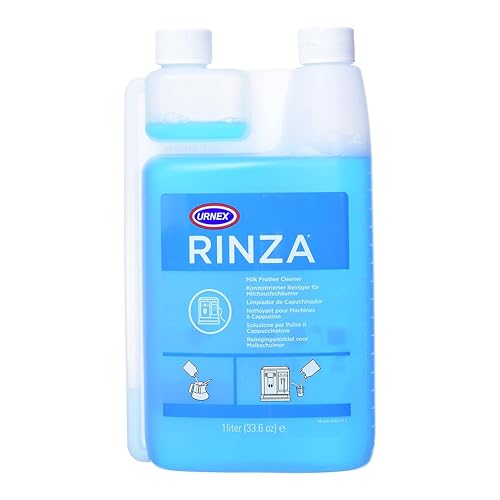
Milk is the residue people underestimate. Proteins and fats bake onto the inside of a steam wand within hours, clog the tip, and eventually sour every drink the wand touches. Wiping and purging after each use handles the outside; Rinza handles the inside. Soak the wand tip (or run the solution through an automatic frothing system) and it breaks down milk protein, fat and calcium in one pass. If your cappuccinos have developed an off, cheesy note, this is the cure — and if you froth daily, it is not optional. Pairs with everything in my milk frother guide.
Type: milk system cleaning liquid | Use: weekly, or per your machine's milk-clean cycle | Best for: Steam wands, automatic frothers, pitchers
Check price on Amazon →5. Urnex Grindz Grinder Cleaning Tablets
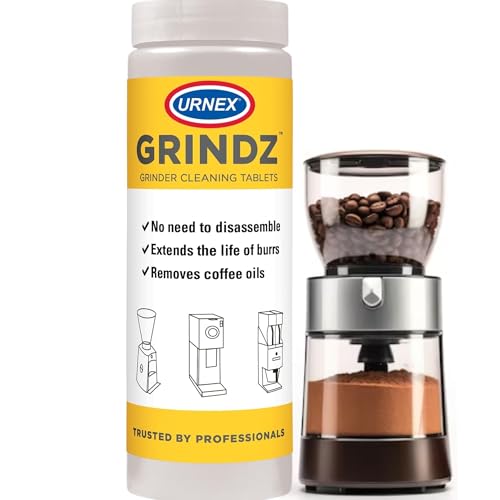
Your grinder gets dirty in exactly the way your machine does: coffee oils coat the burrs, old fines pack into the chamber, and both go stale and rancid. Grindz tablets are food-safe pellets you run through the grinder like beans — no disassembly, no screwdriver — and they scrub the burrs and carry the old grounds out. Run a small dose of coffee through afterward to purge, and the next cup tastes noticeably cleaner. Monthly for daily grinders. It works for the electric grinders in my grinder guide; for hand grinders like the ones in the manual grinder roundup, a brush-out is usually enough. Espresso setups need this habit most of all: the fine, oily grinds that the best espresso grinders produce pack the burrs faster than any filter grind.
Type: grinder cleaning tablets | Use: monthly, run through like beans | Best for: Electric burr grinders
Check price on Amazon →6. Pallo Coffeetool Group Head Brush

The ten-second daily habit that makes the weekly deep clean easy. The Pallo's angled bristles reach up around the group head gasket and shower screen — where spent grounds pack in and plain rinsing never reaches — while the shield keeps hot water off your fingers. The handle end doubles as a scoop and a gasket pick. Cafe closing crews use exactly this brush for a reason: thirty seconds after the last shot of the day prevents most of the buildup you would otherwise be dissolving later.
Type: angled group head brush | Use: daily, after the last shot | Best for: Gasket and shower screen scrubbing
Check price on Amazon →Which cleaners do you actually need?
Match the kit to your machine. A semi-automatic (Gaggia, Rancilio, Breville and the machines in my espresso machine guide and budget espresso roundup) needs Cafiza, Dezcal and the Pallo brush — add Rinza if you steam milk. A super-automatic needs EcoDecalk plus its own cleaning program, with Rinza for the milk circuit. And every setup with an electric grinder benefits from Grindz, whatever machine sits next to it. If you buy only one product today, make it Cafiza: rancid oil is the problem you can taste tomorrow, and it is the cheapest fix on this page.
How often should you clean and descale an espresso machine?
This is the schedule I follow, assuming one or two shots a day at home. Scale it up with heavier use:
- After every session: knock out the puck, rinse the portafilter and basket, wipe and purge the steam wand, flush the group head for a few seconds.
- Daily: a ten-second scrub of the gasket and shower screen with the group head brush.
- Weekly: backflush with a Cafiza tablet (machines with a three-way valve), soak the portafilter and baskets in Cafiza solution, and soak the steam wand tip in Rinza if you froth milk.
- Monthly: run Grindz through the grinder and purge with a small dose of beans.
- Every 1–3 months: descale with Dezcal — monthly with hard tap water, quarterly with soft or filtered water. Super-automatics: descale when the machine prompts, with EcoDecalk. For the full walkthrough, see how to descale an espresso machine step by step.
Two habits shrink this whole list. First, brew with better water: softer, properly mineralized water builds scale far more slowly — see my guide to the best water for coffee. Second, use fresh beans. Stale, oily supermarket beans gum up grinders and machines faster than fresh specialty coffee, and they taste worse doing it.
A clean machine deserves coffee worth pulling
Our Café Palo Alto — caramel and cocoa depth that shines as espresso and in milk drinks — is sourced fresh directly from the producer in Panama and delivered worldwide in 5 days. The 4-pack ships free.
Shop Café Palo Alto →Building out the rest of the station? My guides to the best espresso accessories and best coffee scales cover the prep side, the best milk frothers handle the latte side, and if you are still choosing the machine itself, start with the best home espresso machines or the best budget espresso machines. Once everything is clean, keep your beans that way too with one of the best coffee storage canisters.
Espresso machine cleaning FAQ
How often should I descale my espresso machine?
Every one to three months for most home machines: monthly if you use hard tap water, quarterly if you use soft or filtered water. Super-automatic machines track water usage and tell you when to descale — follow the prompt rather than a calendar.
Can I descale an espresso machine with vinegar?
It is not recommended. Vinegar is weaker against scale than a dedicated descaler, its acetic acid can degrade rubber seals and aluminum parts, the smell lingers through many flushes, and several manufacturers void the warranty if vinegar damage is found. A citric or lactic acid descaler costs a few dollars and avoids all of it.
What is the difference between cleaning and descaling?
Cleaning removes coffee oils with an alkaline detergent like Cafiza and targets the group head, portafilter and baskets. Descaling removes mineral limescale with an acid like Dezcal and targets the boiler and water paths. They solve different problems, and a well-maintained machine needs both on different schedules.
Do I need a blind basket to backflush?
Yes. A blind (blank) basket has no holes, which forces water and cleaner back through the group head and three-way valve. Many machines include one; if yours did not, they cost very little. Only backflush machines with a three-way valve — most semi-automatics have one, but check your manual first.
Why does my espresso taste bitter even with fresh beans?
If good, freshly roasted beans still taste bitter or ashy, built-up rancid coffee oil in the group head is the most common cause. Run a proper backflush with a cleaning tablet and scrub the shower screen; in most cases the sweetness returns immediately.
As an Amazon Associate, Boquete Coffee Traders earns from qualifying purchases.