

Best Water for Coffee: Minerals and Filters (2026)
By Juan Carlos Sosa | Boquete Coffee Traders
Coffee is roughly 98 percent water, and yet almost nobody thinks about it. You can buy the finest Geisha in the world, grind it perfectly, hit your ratio to the tenth of a gram — and then pour flat, chlorinated tap water over it and wonder why the cup tastes like nothing. Choosing the best water for coffee is the cheapest upgrade in specialty brewing, and it is the one most people skip. This guide covers the mineral packs, sticks and filters I actually use, and what the numbers mean.
IN A HURRY? OUR TOP PICKS
- Best overall: Third Wave Water Classic Light Roast Profile — the reference standard for filter brewing, and what makes a Geisha finally taste like the cupping notes.
- Best for espresso machines: Third Wave Water Espresso Machine Profile — full extraction with far less scale risk inside the boiler.
- Best value: Coffee Water Mineral Packs (25 gallons) — the lowest cost per gallon here, for people who brew every single day.
- Best gentle profile: Perfect Coffee Water Minerals — a softer, rounder mineral balance that flatters delicate washed lots.
- Best base water: ZeroWater 10-Cup Ready-Pour Pitcher — gets you to zero TDS so the minerals above are all you are tasting.
ON THIS PAGE
Best water for coffee at a glance
| Product | Type | Best for | Price |
|---|---|---|---|
| Third Wave Water Classic Light Roast | Mineral sticks, 12 gallons | Pour-over, filter, light roasts, Geisha | $$ |
| Third Wave Water Espresso Machine Profile | Mineral sticks, 5 gallons | Espresso machines, scale control | $$ |
| Coffee Water Mineral Packs | Mineral packs, 25 gallons | Daily brewers, best cost per gallon | $ |
| Perfect Coffee Water Minerals | Mineral sticks, 10 gallons | Delicate washed lots, softer cups | $$ |
| ZeroWater 10-Cup Ready-Pour Pitcher | 5-stage filter pitcher | Creating 0 TDS base water at home | $$ |
What makes good brewing water
Water does two jobs in a cup of coffee. It dissolves flavour out of the grounds, and it carries that flavour to your palate. Minerals are what let it do the first job. Magnesium grabs the fruity, sweet, aromatic compounds. Calcium pulls the heavier, body-forming ones. Bicarbonate buffers acidity, softening the bright notes. Get the balance wrong in either direction and the coffee suffers.
Too soft — distilled or reverse-osmosis water with nothing in it — and extraction stalls. The cup tastes hollow, thin, weirdly sour. Too hard, which is what most municipal tap water is, and the excess bicarbonate flattens the acidity into something dull and chalky, while calcium quietly cements itself inside your kettle and espresso boiler.
The Specialty Coffee Association publishes a target that most of the industry works from: total dissolved solids around 150 mg/L, calcium hardness near 68 mg/L as calcium carbonate, alkalinity around 40 mg/L, and a pH close to neutral. Every product below is a way of hitting that window without a chemistry degree. And chlorine, worth saying plainly, has no place near coffee at all — it does not extract anything, it just tastes like a swimming pool.
The picks, reviewed
1. Third Wave Water Classic Light Roast Profile

This is the one that converts people. You tear open a stick, drop it into a gallon of distilled or reverse-osmosis water, shake, and you have brewing water dialled to the specialty target. On a light-roast Panama Geisha the difference is not subtle: the jasmine lifts out of the cup instead of sitting under it, and the citrus acidity turns clean and structured rather than sharp. It is the cheapest way I know to make an expensive coffee taste like what you paid for. The catch is that it only works on top of near-zero-TDS water — put it in tap water and you are stacking minerals on minerals.
Format: 12 single-gallon sticks | Dose: 1 stick per gallon | Needs: distilled or RO base water | Best for: pour-over, AeroPress, filter, Geisha
Check price on Amazon →2. Third Wave Water Espresso Machine Profile

Espresso is a different problem. You want enough mineral content to extract properly under pressure, but a boiler that sits at 90-plus degrees all day will happily turn ordinary hard water into limescale and kill a machine that cost you a month's salary. This profile is built for exactly that compromise: it extracts with real body and sweetness, and it is formulated to keep scale build-up low. If you own a pump machine, this is not a luxury, it is maintenance you can taste. Pull a shot of Cafe Palo Alto with it and the crema comes out heavier and the chocolate notes sit deeper.
Format: 5 single-gallon sticks | Dose: 1 stick per gallon | Needs: distilled or RO base water | Best for: espresso machines, milk drinks, Moka
Check price on Amazon →3. Coffee Water Mineral Packs (25 gallons)

The maths matters here. If you brew every morning, a twelve-pack of sticks disappears in a month and the habit starts to feel expensive. This one makes twenty-five gallons, which brings the cost per gallon down far enough that mineral dosing stops being a special-occasion ritual and becomes just how you make coffee. The profile is a solid all-rounder rather than a specialist — it will not tease as much floral detail out of a competition lot as the Classic profile does — but for daily brewing across a range of coffees it is more than good enough, and volume is the point.
Format: mineral packs, makes 25 gallons | Needs: distilled or RO base water | Best for: daily brewers, households, cost per cup
Check price on Amazon →4. Perfect Coffee Water Minerals

The pitch in the name is honest: brew better, not bitter. This is a softer, rounder mineral balance than the Third Wave Classic, and there are coffees that prefer it. Very delicate washed lots — a Catuai from Boquete, a lighter Caturra — can come across as aggressive on a high-magnesium profile, all edges and no middle. Here they land sweeter and more composed. If you have tried mineral dosing before and found the results too intense or too acidic, this is the one to try next.
Format: 10 stick packets, 1 gallon each | Needs: distilled or RO base water | Best for: washed coffees, softer cups, bitterness-sensitive palates
Check price on Amazon →5. ZeroWater 10-Cup Ready-Pour Pitcher
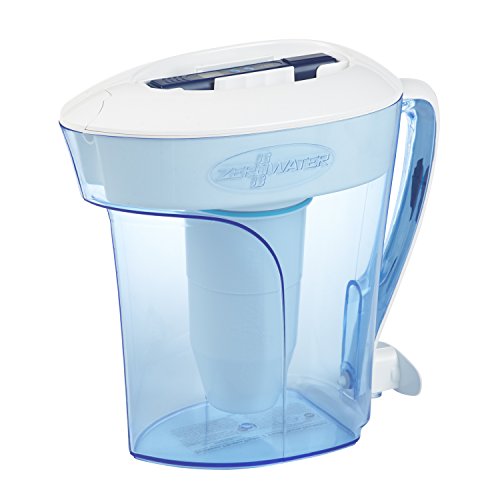
Everything above needs a blank canvas to work on, and this is how you make one at home without hauling jugs of distilled water back from the shop. A standard carbon pitcher will not do it — it removes chlorine and leaves most of the minerals in place, which is fine for drinking and useless for dosing. The five-stage ZeroWater filter takes tap water down to a reading of zero total dissolved solids, and it ships with a small meter so you can actually confirm it. Fill, dose, brew. One honest warning: filters exhaust faster in hard-water regions, and the water tastes noticeably off when they do, which is your cue to change it.
Capacity: 10 cups | Filtration: 5-stage to 0 TDS | Includes: TDS meter | Best for: making your own base water for any mineral pack above
Check price on Amazon →Which should you choose?
If you brew pour-over and you care about light roasts, buy the Classic Light Roast profile and a way to make zero-TDS water. That pairing is the whole answer. If you own an espresso machine, buy the Espresso profile instead, and consider it part of protecting the machine rather than an indulgence. If you brew daily and the cost of sticks is what has been putting you off, go straight to the 25-gallon mineral packs. And if you have already tried mineral water and found it too sharp, the Perfect Coffee Water profile is the gentler road back in.
The ZeroWater pitcher is not really a competing pick — it is the foundation the others stand on. You need either that, a reverse-osmosis tap, or bought distilled water. Skipping this step is the single most common reason people try mineral packs, taste no difference, and conclude the whole thing is a myth.
How to use brew water properly
- Start at zero. Distilled, reverse-osmosis or ZeroWater output. Never dose minerals into tap water — you will overshoot hardness badly.
- Mix the full gallon. The sticks are dosed for a gallon. Splitting one across a smaller volume by eye is how you end up with water that is far too hard.
- Shake until it is clear. Undissolved mineral sitting at the bottom of the jug means your first brews are weak and your last one is a salt lick.
- Brew at 92 to 96 degrees Celsius (198 to 205 Fahrenheit). Mineral water does not change your temperature target, but it does make a bad one more obvious.
- Use it fresh. Mixed water keeps for about a week in a sealed jug. Beyond that, make more.
- Judge it against your old water once. Brew the same coffee, same grind, same ratio, one cup either side. That single comparison is what makes the habit stick.
Great water deserves a coffee worth the trouble
Our Panama Geisha — jasmine, citrus and floral in the cup — is sourced directly from the producer in Panama and delivered worldwide in 5 days.
Shop Panama Geisha →Water is one variable in a chain, and it only pays off when the rest of the chain is sound. If your grinder is inconsistent, start with our guide to the best coffee grinders for pour-over — or the best manual coffee grinders if you would rather grind by hand. If espresso is the goal, the stakes are higher still — the best espresso grinders are a separate shortlist built for the fine end of the range. For a machine that grinds and brews a full pot in one, see the best grind and brew coffee makers. Worth knowing too that the laboratory test behind brewer certification is run on water held to this exact mineral band — which is why a certified machine on bad water still makes bad coffee — so I went through the SCA-certified coffee makers and what the badge does and does not prove. Getting your ratio right needs a proper coffee scale, and pour control comes from a good gooseneck kettle. If you want to verify what all this water chemistry is actually doing in the cup, one of the best coffee refractometers will read the finished brew's TDS and put a number on the difference. The same logic applies to ice, which is just frozen brew water: the best nugget ice makers for iced coffee guide starts with what goes in the tank. For espresso, see our pick of the best home espresso machines, and keep your beans in shape with the best coffee storage canisters. And if hard water has already left scale inside your machine, here is how to descale an espresso machine step by step. Then put it all together with our guide on how to brew Panama Geisha at home.
Frequently asked questions
What is the best water for brewing coffee?
Water with roughly 150 mg/L of total dissolved solids, calcium hardness around 68 mg/L, low alkalinity and no chlorine. In practice the easiest way to get there is distilled or reverse-osmosis water with a coffee mineral pack such as Third Wave Water dissolved into it.
Can I just use tap water for coffee?
You can, and millions of people do, but tap water is the most common reason a good coffee tastes dull. Chlorine adds an off flavour, and high alkalinity flattens the acidity that makes specialty coffee interesting. If nothing else, filter the chlorine out.
Is distilled water good for coffee?
Not on its own. Distilled water has no minerals, so it extracts poorly and produces a hollow, flat cup. It is an excellent starting point, but it needs minerals added back before you brew with it.
Does water really change how coffee tastes?
Dramatically. A brewed cup is about 98 percent water, and the minerals in that water determine which flavour compounds are pulled out of the grounds. The same beans brewed with soft mineral water and with hard tap water taste like two different coffees.
Do I need a TDS meter?
Not if you are dosing a pre-measured mineral stick into a known volume of zero-TDS water, because the maths is done for you. A meter is useful for confirming your base water is actually at zero, and for knowing when a filter is exhausted. The ZeroWater pitcher includes one.
Will mineral water damage my espresso machine?
The opposite, if you use the right profile. Ordinary hard tap water is what scales up a boiler. An espresso-specific mineral profile is formulated to extract properly while keeping scale build-up low, which is why it is worth using in any pump machine.
As an Amazon Associate, Boquete Coffee Traders earns from qualifying purchases.