

Best Coffee Equipment for Brewing Geisha Coffee at Home (2026)
By Juan Carlos Sosa | Boquete Coffee Traders | @thecoffeejuan
You have decided to brew Panama Geisha at home, which is one of the best decisions a coffee drinker can make. It is also the point at which the coffee equipment for brewing Geisha stops being a hobbyist question and becomes a practical one, because Geisha is the least forgiving coffee most people will ever buy. A bag that costs $69 can be reduced to something ordinary by a grinder that costs $20.
This guide is deliberately not another list of the best grinders or the best kettles — I have written those separately and they go far deeper. This is the shorter, harder question: if you are brewing Geisha specifically, what is the one thing to buy in each category, and why? Seven pieces, one pick each, and a link to the full comparison if you want to see the runners-up.
IN A HURRY? OUR TOP PICKS
- The one that matters most: Baratza Encore — grind consistency decides whether Geisha tastes floral or muddled. Nothing else comes close in impact.
- Best kettle: Fellow Stagg EKG — holds 94°C exactly, so you never scorch the aromatics you paid for.
- Best brewer for Geisha: Hario V60 Ceramic — the cleanest, most transparent cup, which is exactly what this coffee wants.
- Best scale: Hario V60 Drip Scale — 0.1 g and a built-in timer, so a good brew is repeatable instead of lucky.
- Best second brewer: AeroPress — a completely different reading of the same bag, and it travels.
- Best for body: Bodum Chambord French Press — heavier and rounder, forgiving if you are new.
- Best storage: Fellow Atmos — Geisha's aromatics fade fastest of anything in your kitchen.
The Geisha brewing kit at a glance
| Piece | Why it matters for Geisha | Buy it | Price |
|---|---|---|---|
| Baratza Encore | Even grind. The single biggest lever on the cup. | First | $$$ |
| Fellow Stagg EKG | Holds 94°C. Boiling water flattens the florals. | Second | $$$ |
| Hario V60 Ceramic | Paper filter, clean cup, nothing between you and the coffee. | Third | $ |
| Hario V60 Drip Scale | Makes a good brew repeatable rather than accidental. | Fourth | $$ |
| AeroPress | A second, denser reading of the same bag. Travels. | Optional | $ |
| Bodum Chambord | Fuller body, more forgiving technique. | Optional | $ |
| Fellow Atmos | Vacuum seal. Geisha's aromatics fade faster than the coffee goes stale. | Optional | $ |
Price guide: $ under ~$50 · $$ ~$50–120 · $$$ ~$120+
ON THIS PAGE
Why gear matters more with Geisha than with any other coffee
Most coffee is forgiving. Grind a Catuai slightly wrong, pour boiling water on it, use an uneven blade grinder, and you will still get a perfectly pleasant cup of chocolate and caramel. The flavors are robust and roast-driven, and they survive rough handling.
Geisha does not work that way. What makes it worth its price is a set of extremely volatile aromatic compounds — jasmine, bergamot, stone fruit, citrus — sitting on a body so light it is usually described as tea-like. Every one of those qualities is fragile. Water at a full boil scorches them. An uneven grind extracts some particles to bitterness while others stay sour, and the two cancel out into something flat. A bag left open on the counter for three weeks loses the florals entirely while still tasting fine as generic coffee.
That is the honest case for spending money on equipment: not connoisseurship, but not throwing away the difference between a $21 bag and a $69 one. If you want to understand what you are protecting, start with what Geisha actually tastes like.
The seven pieces, one pick each
Each card below names the one thing I would buy, and why it specifically suits Geisha. Where I have written a full comparison of that category, the link under the button takes you to it — that is where the runners-up, the budget alternatives and the trade-offs live.

1. The grinder — Baratza Encore
If you buy one thing, buy this. A blade grinder chops beans into dust and boulders at the same time; the dust over-extracts into bitterness while the boulders under-extract into sourness, and with Geisha the result is a cup that tastes like neither jasmine nor citrus but a muddy compromise of both. The Encore's conical burrs produce a genuinely even grind across the pour-over range, which is the entire game. It is not the finest grinder made, but it is the cheapest one I would trust with a $69 bag.
Type: Conical burr, electric | Range: 40 settings, coarse to espresso-adjacent | Best for: daily Geisha brewing without thinking about it
Check price on Amazon →
2. The kettle — Fellow Stagg EKG
Two jobs, and Geisha needs both. The gooseneck spout gives you a slow enough pour to wet every ground evenly instead of blasting a channel through the bed. The temperature control keeps you at 94°C instead of 100°C, and that six-degree gap is the difference between jasmine and a faint burnt edge where the jasmine should be. If the budget will not stretch, the stovetop Hario Buono pours just as well — you just have to watch the thermometer yourself.
Type: Electric gooseneck | Control: 1°C increments, hold function | Best for: hitting 94°C without thinking
Check price on Amazon →
3. The dripper — Hario V60 Ceramic
Pour-over is the right method for Geisha and the V60 is the right pour-over. The cone shape and spiral ridges keep the water moving, and the paper filter strips out the oils and fines that would otherwise blur the cup. What you get is transparency — you taste the coffee, not the device. Choose ceramic over plastic: it holds heat through the brew, which matters more here than it does with a darker roast. The Chemex is the better call for two to four cups, and the Kalita Wave is more forgiving if your pour is still shaky.
Type: Conical pour-over | Material: Ceramic, best heat retention | Best for: one to two cups of the most expressive Geisha you can make
Check price on Amazon →V60 vs Chemex vs Kalita, compared → · Which filters to use →

4. The scale — Hario V60 Drip Scale
This is the piece people skip and then wonder why one morning's cup is glorious and the next is thin. A scale turns a lucky brew into a recipe. You want 0.1 g resolution, a fast enough refresh to follow your pour in real time, and a built-in timer so you are not juggling a phone with wet hands. That is all the Hario does, and it does it for a fraction of the price of the boutique options.
Resolution: 0.1 g | Timer: built in | Best for: making yesterday's good cup repeatable today
Check price on Amazon →
5. The AeroPress
Not a replacement for the V60 — a second opinion. The short steep and gentle pressure give you a denser, sweeter, more concentrated version of the same bag, and comparing the two side by side teaches you more about a coffee than either one alone. It is also nearly indestructible, cleans in ten seconds, and is the only brewer here I would put in a suitcase with a bag of Geisha.
Type: Immersion plus pressure | Brews: one concentrated cup | Best for: travel, and a denser reading of the same coffee
Check price on Amazon →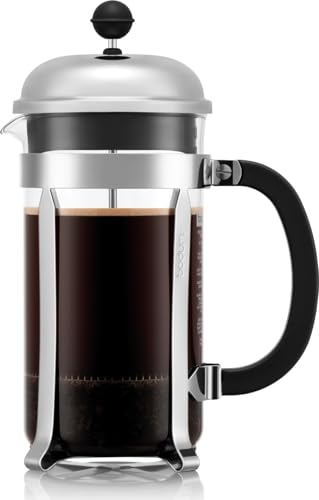
6. The French press — Bodum Chambord
An honest note here: a French press is not the best way to show off Geisha, because the metal filter lets oils and fines through and slightly blurs the clarity that makes the coffee special. What it gives back is weight and a rounder sweetness, and it asks almost nothing of your technique. If your pour-over cups keep coming out thin and you are getting discouraged, brew a press for a week. It is a much more forgiving place to start.
Type: Full immersion | Grind: coarse | Best for: body over clarity, and beginners
Check price on Amazon →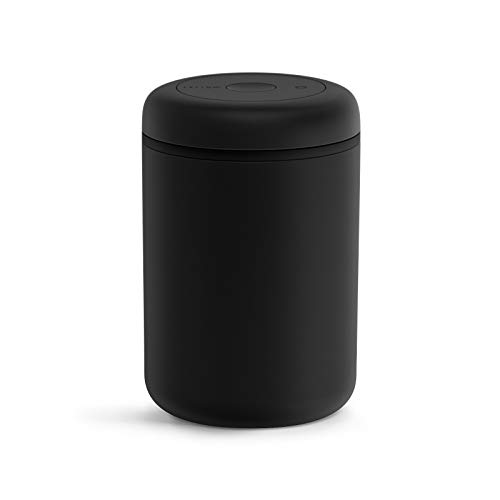
7. The canister — Fellow Atmos
The cheapest way to protect the most expensive thing on your counter. Geisha does not go rancid quickly, but its aromatics leave — and they leave first, so what you are left with after three open weeks is a coffee that tastes fine and no longer tastes like Geisha. The Atmos pulls a vacuum with a twist of the lid, which slows that down more than any clip or zip-lock will. Store it somewhere dark, at room temperature, and never in the fridge.
Type: Vacuum canister | Sizes: 0.4 L and 1.2 L | Best for: keeping an open bag tasting like it did on day one
Check price on Amazon →Atmos vs Airscape vs OXO POP → · How to store beans properly →
What to buy first, second and third
You do not need all seven, and buying them in the wrong order wastes money. If you are starting from nothing:
- The grinder. Nothing else you buy will change the cup as much. A great dripper fed by a blade grinder is worse than a cheap dripper fed by a burr grinder.
- The kettle. Temperature and pour control together are the second-biggest lever, and Geisha is the coffee most punished by boiling water.
- The V60. It costs about the price of a bag of coffee, so it feels like it should come first — but a V60 only rewards you once the first two are in place.
- The scale. Buy it when you start caring whether tomorrow tastes like today.
- Everything else is preference, not progress. The AeroPress, the press and the canister all earn their place, but none of them fixes a bad grind.
And the rule that outranks all seven: grind immediately before you brew, and buy coffee that was recently roasted. A modest setup with fresh beans beats an expensive one fed stale coffee, every single time.
The numbers that matter
Once the gear is on the counter, four numbers do most of the work.
| Variable | For Geisha | Why |
|---|---|---|
| Ratio | 1:16 — 15 g to 240 ml | Slightly lighter than the 1:15 most guides give. Geisha shows better with room to breathe. |
| Water temperature | 92–94°C (198–201°F) | Never boiling. The florals are the first thing heat destroys. |
| Grind | Medium-fine, like table salt | A shade finer than you would use for an everyday washed coffee, to pull the aromatics out in time. |
| Total brew time | 2:45 to 3:15 on a V60 | Running long turns delicate into astringent faster than with any other coffee. |
If your cup is running sour, go finer or hotter. If it is bitter or drying, go coarser or cooler. Our coffee grind size chart has finger-feel references for every setting, and the complete guide to brewing Panama Geisha walks through the full recipe pour by pour. One more variable people forget entirely: the water itself, which is 98 percent of what ends up in the cup. And if you would rather measure than guess, one of the best coffee refractometers puts a TDS number on the cup so you can see which direction a change actually moved it.
Now put something worth brewing in it
Our Panama Geisha — jasmine, citrus and floral in the cup — is sourced directly from the producer in Panama and delivered worldwide in 5 days, with free shipping over $70 in the Americas ($150 for other countries). If you want to taste the ceiling of what this setup can do, the Carmen Estate Geisha took first place in Washed Geisha at the Best of Panama with 96.50 points and sold for $10,005 per kilo at auction.
Shop Panama Geisha →If you are still deciding which Geisha to start with, our guide to the Best of Panama winners covers the estates worth knowing, and why Geisha costs what it does explains where the money actually goes. For the wider gear picture beyond Geisha, the complete coffee maker guide covers all ten ways to brew. If these picks stretch the budget, our first specialty coffee setup under $200 builds the beginner version of the same kit. And once the setup is built, how to host a coffee tasting at home shows you how to put it to work comparing coffees side by side.
Frequently asked questions
What equipment do I need to brew Geisha coffee at home?
Three things cover the essentials: a burr grinder, a gooseneck kettle with temperature control, and a pour-over dripper such as the Hario V60. A digital scale is the natural fourth purchase, and an airtight canister protects the beans between brews. Everything beyond that is preference rather than necessity.
What is the single most important piece of equipment for Geisha?
The grinder, and it is not close. Grind consistency decides whether the coffee extracts evenly, and an uneven grind produces bitterness and sourness at the same time, which flattens the floral character you paid for. A cheap dripper with a good burr grinder beats an expensive dripper with a blade grinder every time.
What water temperature is best for brewing Geisha?
92 to 94 degrees Celsius, which is 198 to 201 Fahrenheit. Never boiling. Geisha's aromatic compounds are volatile and heat drives them off, so water straight off a rolling boil strips out the jasmine and bergamot notes and leaves a faint burnt edge behind.
What coffee-to-water ratio should I use for Geisha?
Start at 1 to 16 by weight, which is 15 g of coffee to 240 ml of water. That is slightly lighter than the 1 to 15 usually recommended for filter coffee, and Geisha tends to show more clearly with a little more room. Adjust from there once you have brewed the same coffee a few times.
Is a French press a bad choice for Geisha?
Not bad, but not the best showcase. The metal filter lets oils and fine particles into the cup, which adds body but blurs the clarity that makes Geisha distinctive. It is more forgiving of technique than pour-over, so it is a reasonable place to start if your pour-over cups keep coming out thin.
Do I need a separate grinder setting for Geisha?
Usually a shade finer than you would use for an everyday washed coffee, around a table-salt texture on a V60. Geisha is often roasted lighter, and lighter roasts are denser and give up their aromatics more slowly, so a slightly finer grind helps you extract them within a normal brew time.
As an Amazon Associate, Boquete Coffee Traders earns from qualifying purchases.