

Best Turkish Coffee Pots (2026): Cezve & Ibrik Compared
By Juan Carlos Sosa | Boquete Coffee Traders
A good Turkish coffee pot — the little long-handled pot called a cezve (or ibrik) — is the method. It is where the finely ground coffee, water and heat meet to build that signature layer of thick foam. Get the pot right and Turkish coffee is one of the easiest, most rewarding brews there is. Below are the Turkish coffee pots I would actually reach for, from thick hammered copper to induction-ready and fully automatic picks, judged by what they do in the cup rather than how they photograph.
IN A HURRY? OUR TOP PICKS
- Best overall: CopperBull Thickest Solid Copper — heavy 2 mm tinned copper that heats fast and builds foam beautifully.
- Best low-maintenance: Cuisinox Stainless Steel Cezve — no polishing, no re-tinning, just make coffee.
- Best for induction: Induction-Ready Cezve — the fix for kitchens where copper simply will not heat.
- Best automatic: Arzum Okka Minio — one button, foolproof foam, no stovetop nerves.
ON THIS PAGE
Best Turkish coffee pots at a glance
| Pot | Best for | Material | Capacity | Price |
|---|---|---|---|---|
| CopperBull Thickest Copper | Best overall | 2 mm tinned copper | 15 oz (2-4 cups) | $$ |
| DEMMEX Engraved Copper | Best handmade copper | Engraved tinned copper | 9 oz (3 cups) | $$ |
| Cuisinox Stainless Steel | Best low-maintenance | 18/10 stainless steel | 12 oz (2-3 cups) | $$ |
| Induction-Ready Cezve | Best for induction stoves | Induction-ready steel | ~1-2 cups | $ |
| LAZWARD Hammered Copper | Best budget | Hammered copper | 6.75 oz (1-2 cups) | $ |
| Arzum Okka Minio | Best automatic | Electric machine | Up to 4 cups | $$$ |
Price key: $ = under ~$25 | $$ = ~$25-60 | $$$ = ~$100+. Prices are approximate and change often — tap through for the current Amazon price.
What makes a good Turkish coffee pot
A cezve looks simple, and it is, but a few details separate a pot you will love from one you will replace.
Shape. The classic wide base and narrow neck are not just for looks. The wide bottom sits over the heat and the tapered neck concentrates and protects the foam as it rises, so it does not collapse when you pour. Look for a pronounced waist, not a straight-sided mug.
Material. Copper is traditional because it conducts heat fast and evenly, giving you fine control over the crucial slow rise of the foam — but copper must have a tinned interior (raw copper should not touch acidic coffee) and it needs hand-washing and occasional care. Stainless steel is slower to heat but nearly indestructible and dishwasher-friendly. Both make excellent coffee; it is a question of how much upkeep you want.
Thickness. Heavier gauge metal heats more evenly and is far less likely to scorch the grounds. The thin souvenir pots you see in tourist shops heat in hot spots and boil over in a blink. A 1-2 mm wall is worth paying for.
Size. Turkish coffee is served in tiny 2 to 2.5 oz cups, and a cezve should never be filled more than about two-thirds, or it will boil over. So buy for the number of cups you actually make: a 6-9 oz pot for one to three servings, a 12-15 oz pot for a small group. A too-large pot half-filled makes a worse cup than a right-sized one.
Handle and spout. You want a long handle that stays cool (wood or a heat-isolated metal), and a defined pouring lip so the foam slides out cleanly into the cup.
Your stovetop. One thing that catches people out: traditional copper and thin steel will not work on an induction hob, because the metal is not magnetic. If you have induction, you need a pot with a compatible base — see the induction pick below.
The 6 best Turkish coffee pots, reviewed

1. CopperBull Thickest Solid Hammered Copper Cezve
If you are going to own one cezve for life, this is it. The copper is a genuine 2 mm thick — far heavier than the flimsy souvenir pots — so it heats fast but evenly and holds a steady temperature, which is exactly what you want for coaxing up a slow, dense foam without scorching the grounds. The interior is tin-lined for food safety, and the broad base narrows to a proper neck that traps the crema on top. At 15 oz it comfortably handles two to four demitasse servings. It is the pot I would hand someone who wants to do this properly the first time.
Material: 2 mm tinned copper | Capacity: 15 oz (2-4 cups) | Best for: A lifetime everyday cezve
Check price on Amazon →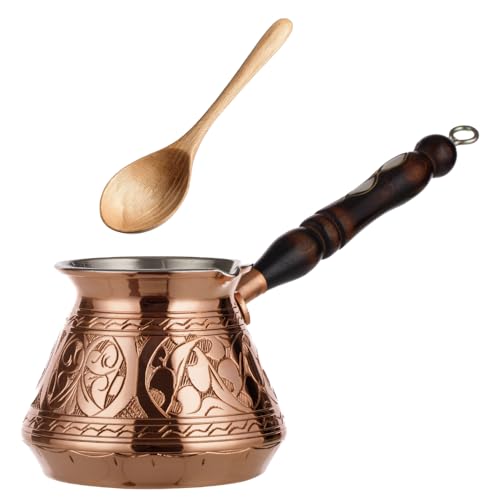
2. DEMMEX Engraved Copper Cezve
DEMMEX pots are hand-hammered and engraved in Turkey, and it shows — this is the one that looks like an heirloom on the stove and on the shelf. Function keeps pace with the looks: the tinned copper heats quickly and keeps the coffee tasting clean, and the 9 oz size is the household sweet spot at about three small servings, easy to control the foam. It ships with a matching copper spoon and wooden handle. A lovely gift, and a genuinely good brewer — not just a decoration.
Material: Hand-engraved tinned copper | Capacity: 9 oz (3 cups) | Best for: A gift-worthy traditional pot
Check price on Amazon →
3. Cuisinox Stainless Steel Turkish Cezve
Copper is beautiful, but it asks for care: hand-washing, the occasional polish, re-tinning years down the road. If you would rather just make coffee, this 18/10 stainless Cuisinox is the answer. It will not tarnish, it wipes clean, and the dual pouring spouts (left and right) suit either hand. It heats a touch more slowly than copper, which is honestly forgiving for beginners still learning to catch the foam before it climbs over the rim. Works on gas and electric coil stoves; if you are on induction, see the next pick.
Material: 18/10 stainless steel | Capacity: 12 oz (2-3 cups) | Best for: Low-maintenance daily use
Check price on Amazon →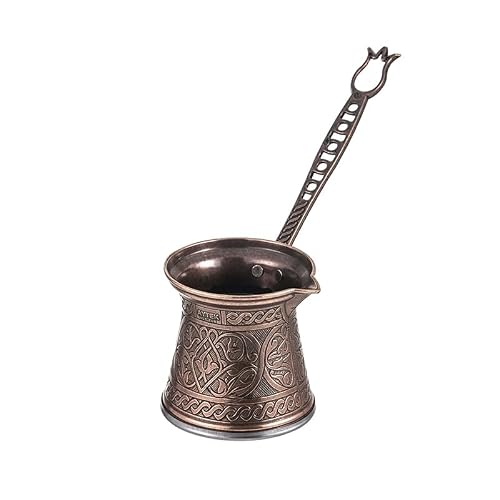
4. Induction-Ready Steel Cezve
Traditional copper cezves simply do not work on an induction hob — the metal is not magnetic, so the burner never sees it. If your kitchen is induction, you need a pot with a compatible steel base, and this is a well-priced one that solves the problem. It is on the small side, built for one to two servings, which actually suits the concentrated Turkish style, and the brass-finish handle stays cool enough to pour. Not a family-sized pot, but the right tool if induction is your only burner.
Material: Induction-ready steel | Capacity: ~1-2 cups | Best for: Induction cooktops
Check price on Amazon →
5. LAZWARD Small Hammered Copper Cezve
A first cezve should not cost much, and this small hammered-copper LAZWARD pot lets you learn the method without a big outlay. At about 6.75 oz it makes one or two proper servings, the hammered finish looks the part, and the long handle keeps your hand off the heat. The copper is thinner than the CopperBull, so watch it a little more closely on the burner — but for trying Turkish coffee for the first time, or as an inexpensive second pot for one, it does the job honestly.
Material: Hammered copper | Capacity: 6.75 oz (1-2 cups) | Best for: Trying Turkish coffee on a budget
Check price on Amazon →
6. Arzum Okka Minio Automatic Turkish Coffee Machine
Turkish coffee is the one brew method where a machine genuinely earns its place, because the hardest part — catching the foam at the exact moment before it boils over — is the part people get wrong. The Arzum Okka Minio does it for you: add coffee, water and sugar to the pot, press one button, and it heats gently, delivers the foam intact and beeps when it is done. It is a splurge next to a simple cezve, but for a hands-off, repeatable cup — or for anyone nervous about the stovetop dance — it is the most reliable route to good Turkish coffee at home. Makes up to four small cups.
Type: Automatic electric | Capacity: Up to 4 cups | Best for: Hands-off, foolproof foam
Check price on Amazon →Which cezve should you choose?
If you want one pot to keep for years and you enjoy the ritual, buy the CopperBull — the thick copper makes the whole process more forgiving and it will outlast everything else in the drawer. If the idea of polishing and hand-washing puts you off, the Cuisinox stainless gives you the same great coffee with zero fuss. Cooking on induction? Your decision is made for you: only the induction-ready cezve will actually heat. Buying a gift, or want the prettiest pot on the counter, and the engraved DEMMEX is hard to beat. Just testing the waters, and the LAZWARD gets you brewing for very little. And if you would rather not stand over the stove at all, let the Arzum Okka Minio handle the foam for you.
How to make Turkish coffee in a cezve
The pot does half the work; here is the rest. Turkish coffee rewards patience and a very fine grind.
1. Grind to a powder. Turkish coffee needs the finest grind in all of coffee — finer than espresso, closer to flour or powdered sugar. Most home grinders cannot reach it, so use a dedicated Turkish setting, a hand mill made for it, or ask your roaster to grind it Turkish-fine.
2. Measure into the cold pot. Add one heaping teaspoon of coffee per demitasse, then the same number of small cups of cold water. Add sugar now if you take it (Turkish coffee is sweetened in the pot, not the cup), and a pinch of cardamom if you like. Stir once to combine.
3. Heat low and slow. Put the cezve over low heat and leave it alone — do not stir again. As it warms, a dark foam will begin to form and creep up the neck. This slow rise is the whole point; rushing it on high heat gives you a boiled, foamless cup.
4. Catch the foam. Just as the foam rises toward the rim — before it boils over — lift the pot off the heat. For extra foam, spoon a little into each cup, return the pot for a second rise, then pour the rest.
5. Pour and settle. Pour gently, foam first. Let the cup sit a minute so the grounds settle to the bottom, and sip without stirring — the last centimeter is sediment, not a mistake.
The single biggest upgrade, though, is the coffee itself. Turkish coffee is intense and unfiltered, so freshness and quality come through with nowhere to hide — stale, oily supermarket grounds taste harsh and flat brewed this way.
Give your cezve coffee worth brewing
Our Cafe Palo Alto — a smooth Panama medium roast with chocolate, caramel and toasted-nut notes and low bitterness — is sourced directly from the producer in Panama and delivered worldwide in 5 days. Ground to a fine powder, it makes a Turkish cup that is rich and sweet rather than harsh.
Shop Cafe Palo Alto →Want to go deeper? Turkish coffee uses the finest setting on our coffee grind size chart, and it is a close cousin of stovetop moka pot brewing — if you enjoy one you will likely enjoy the other, so it is worth seeing our picks for the best moka pots too. For the beans, start with our guide to how to brew Panama coffee and the award winners in Best of Panama coffee. And for another slow, single-cup ritual, try a Vietnamese coffee filter (phin). And because the pot is only half of the setup, our guide to the best Turkish coffee grinders covers the brass mills and hand grinders that actually reach the flour-fine grind a cezve needs.
Turkish coffee pot FAQ
What is the difference between a cezve and an ibrik?
In everyday use, none — they are the same little long-handled pot for making Turkish coffee, just different regional names. "Cezve" is the Turkish term, while "ibrik," "briki" and "kanaka" turn up across Greece, the Balkans and the Arab world. Strictly, an ibrik traditionally had a lid and spout for serving, but sellers today use the words interchangeably.
What size Turkish coffee pot should I buy?
Buy for the number of small cups you make, and remember a cezve should never be more than about two-thirds full or it boils over. A 6 to 9 oz pot is ideal for one to three servings; step up to 12 to 15 oz only if you regularly brew for a group. A large pot half-filled actually makes a worse cup than a right-sized one.
Copper or stainless steel cezve?
Copper heats fast and evenly and is the traditional choice, giving you fine control over the foam — but it needs a tinned interior and hand-washing, and it will want polishing over time. Stainless steel heats a little slower but is nearly indestructible, will not tarnish and is easy to clean. Both make excellent coffee; pick based on how much upkeep you want.
Can I use a Turkish coffee pot on an induction stove?
Only if it is made for it. Traditional copper and thin steel are not magnetic, so an induction burner will not heat them at all. For an induction cooktop you need a cezve with a compatible steel base, like the induction-ready pick in this guide.
What grind do I need for Turkish coffee?
The finest grind there is — finer than espresso, more like flour or powdered sugar. Most standard grinders cannot get there, so use a Turkish setting if your grinder has one, a hand mill built for it, or have your roaster grind the beans Turkish-fine.
As an Amazon Associate, Boquete Coffee Traders earns from qualifying purchases.