
Best Coffee Percolators (2026): Stovetop, Electric & Camping
By Juan Carlos Sosa | Boquete Coffee Traders
A coffee percolator makes the boldest, most old-fashioned cup in the kitchen — hot water cycles up through the grounds again and again until the coffee is strong and rich. It needs no paper filters and no electricity (unless you want it), which is why the percolator has been a camp and kitchen staple for a century. Below are the best coffee percolators I would actually buy, from a do-everything stovetop pot to a set-and-forget electric and a rugged camping model, plus how to brew a smooth cup rather than a bitter one.
IN A HURRY? OUR TOP PICKS
- Best overall: COLETTI Bozeman (9-cup) — pure stainless and glass, stovetop or campfire, built to last.
- Best electric: Presto 02811 (12-cup) — fill it, plug it in, and it perks and stops on its own.
- Best for camping: GSI Glacier Stainless — rugged, filter-free and campfire-ready.
- Best budget: Farberware Yosemite (8-cup) — the classic stainless percolator for very little.
ON THIS PAGE
Best coffee percolators at a glance
| Percolator | Best for | Type | Capacity | Price |
|---|---|---|---|---|
| COLETTI Bozeman | Best overall | Stovetop / camp | 9 cups | $$ |
| Presto 02811 | Best electric | Electric | 12 cups | $$ |
| GSI Glacier Stainless | Best for camping | Stovetop / campfire | 3-14 cups | $$ |
| Farberware Yosemite 8-Cup | Best budget | Stovetop | 8 cups | $ |
| Farberware Yosemite 12-Cup | Best large / family | Stovetop | 12 cups | $$ |
| Cafe Brew Glass 8-Cup | Best glass | Stovetop, glass | 8 cups | $ |
Price key: $ = under ~$30 | $$ = ~$30-55. Prices are approximate and change often — tap through for the current Amazon price.
What to look for in a coffee percolator
Percolators are simple, but a few choices decide whether yours makes a smooth, strong cup or a bitter one.
Stovetop vs electric. A stovetop (or camp) percolator works on any burner and over a fire, and gives you full control of the heat. An electric one plugs in, perks on its own and switches to keep-warm when it is done — the easy choice for a kitchen counter. Pick electric for convenience, stovetop for versatility and camping.
Material. Stainless steel is the durable, neutral-tasting standard, and the best pots avoid aluminum and plastic in contact with the coffee. Glass lets you watch the perk and cleans up easily but needs gentler handling. Avoid cheap uncoated aluminum if you can.
Size. Percolator "cups" are small (about 5 oz), so a 9 to 12-cup pot suits a household, while a 3 to 6-cup model is right for one or two people or a backpack. Buy for how much you actually drink — a percolator works best filled toward its rated capacity.
The watch-glass knob. The little glass dome on the lid is not just nostalgia: it lets you see the colour and pace of the perk so you can pull the pot before it over-extracts. It is genuinely useful.
Grind and control. Percolators reward a coarse grind and a gentle heat. The models that give you a clear view of the perk, or that shut off automatically, make it much easier to stop at the sweet spot before bitterness sets in.
The 6 best coffee percolators, reviewed

1. COLETTI Bozeman Percolator (9-Cup)
The Bozeman is the percolator I would recommend to almost anyone. It is pure stainless steel and glass — no aluminum or plastic touching your coffee — from a veteran-owned brand that has built its whole business around getting this right. It works on any stovetop and over a campfire, the glass knob lets you watch the perk so you can pull it at the right moment, and it includes filters to keep grounds out of the cup. Sturdy, handsome and built to last for decades.
Type: Stovetop / camp | Capacity: 9 cups | Best for: A do-everything percolator
Check price on Amazon →
2. Presto 02811 Stainless Steel Electric Percolator (12-Cup)
If you want to fill it, plug it in and walk away, the Presto 02811 is the classic electric percolator for good reason. It brews anywhere from 2 to 12 cups, then switches to keep-warm automatically when it is done, so there is no watching the stove or guessing the timing. The stainless build lasts, and it perks a batch faster than you would expect. For a kitchen countertop rather than a campsite, this is the effortless pick.
Type: Electric | Capacity: 12 cups (makes 2-12) | Best for: Set-and-forget countertop brewing
Check price on Amazon →
3. GSI Outdoors Glacier Stainless Percolator
Made by an outdoors brand, the GSI Glacier is the one to throw in the camp box. It is rugged stainless that shrugs off a campfire and a bumpy trunk, with a silicone-wrapped handle so you can pour without a glove and a stainless perk basket that needs no paper filters. This is the pot that made a lot of people fall in love with camp coffee — simple, tough and reliable miles from the nearest power outlet. It comes in sizes from a solo 3-cup up to a 14-cup for the group.
Type: Stovetop / campfire | Capacity: 3-14 cups (by model) | Best for: Camping and the outdoors
Check price on Amazon →
4. Farberware Classic Yosemite Percolator (8-Cup)
The Farberware Yosemite is the grandmother of stovetop percolators — a design that has barely changed in decades because it simply works. Plain stainless steel, a glass knob to watch the perk, and a price that makes it an easy first percolator or a spare for the cabin. It is not fancy, but it is dependable and cheap, and it makes exactly the strong, old-fashioned cup people buy a percolator for in the first place.
Type: Stovetop | Capacity: 8 cups | Best for: Trying a percolator cheaply
Check price on Amazon →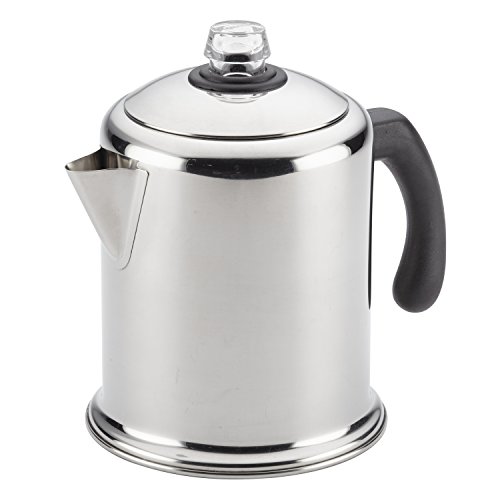
5. Farberware Classic Yosemite Percolator (12-Cup)
Need to make coffee for a crowd? The 12-cup Farberware Yosemite is the same trusted stovetop design sized up for a household or a gathering. It brews a full pot of strong coffee, keeps the cost per cup down, and the classic stainless build will outlive most drip machines in the cupboard. If your everyday is more than a cup or two — or you host often — start here rather than with the smaller model.
Type: Stovetop | Capacity: 12 cups | Best for: Families and gatherings
Check price on Amazon →
6. Cafe Brew Glass Stovetop Percolator (8-Cup)
There is something hypnotic about watching coffee perk in clear glass, and this Cafe Brew (Medelco) percolator is the one to do it in. It is made of heat-resistant borosilicate glass, so it cleans up easily, will not hold onto old flavours the way metal sometimes does, and lets you see the exact moment to take it off the heat. It works on gas and electric ranges. A lovely, low-cost way to brew — just handle it with a little care, as you would any glass.
Type: Stovetop, glass | Capacity: 8 cups | Best for: Watching the perk and easy cleaning
Check price on Amazon →Which percolator should you choose?
For most people the COLETTI Bozeman is the best all-rounder — a beautifully made stainless pot that works on the stove or over a fire. If you would rather not watch it, the electric Presto 02811 perks and stops on its own. Heading outdoors? The GSI Glacier is built for the campfire. On a budget, the Farberware Yosemite 8-cup is the dependable classic, and for a crowd the 12-cup Farberware scales it up. Want to watch the magic happen? The Cafe Brew glass percolator puts on a show.
How to make coffee in a percolator
Percolators have a reputation for bitter coffee, but that is almost always down to the grind and the heat — get those right and the cup is strong, smooth and satisfying.
1. Grind coarse. Use a coarse grind, about like a French press. Fine grounds slip through the basket, cloud the cup and over-extract into bitterness. This is the single most important step.
2. Measure. Add cold water to the pot up to the fill line, and about one tablespoon of coarse coffee per cup to the basket (adjust to taste). Seat the basket and lid.
3. Heat gently. On the stove, bring it up over medium heat until you see the first perks in the glass knob, then turn the heat down to keep a slow, steady perk — not a violent boil. An electric percolator handles this for you.
4. Time it. Perk for about 5 to 8 minutes. Longer and hotter makes it bitter; the glass knob is your guide — you want a steady amber perk, not a dark, furious one. An electric model shuts off automatically at the right point.
5. Pull and serve. Remove the pot from the heat (or unplug it), lift out the basket of grounds so it stops brewing, and pour. Do not re-perk the same grounds — that is where real bitterness comes from.
Because a percolator brews such a bold, robust cup, it rewards a coffee with body and low bitterness rather than a delicate one — which brings us to the beans.
The right coffee for a percolator
Our Cafe Palo Alto — a smooth Panama medium roast with chocolate, caramel and toasted-nut notes and low bitterness — is exactly the kind of full-bodied coffee that shines in a percolator without turning harsh. It is sourced directly from the producer in Panama and delivered worldwide in 5 days.
Shop Cafe Palo Alto →Want to go further? A percolator uses the same coarse grind as a French press — dial it in with our coffee grind size chart, and see how it compares to other brewers in our guide to the best coffee makers and the best French press makers. For the beans, start with how to brew Panama coffee and our Best of Panama coffee guide.
Coffee percolator FAQ
Do percolators make bitter coffee?
Only if you let them. Bitterness comes from too fine a grind, too much heat, or perking too long. Use a coarse grind, keep the perk gentle, stop after 5 to 8 minutes, and remove the grounds when done — and a percolator makes a strong, smooth cup. A low-bitterness, chocolatey roast helps too.
What is the difference between a percolator and a moka pot?
A percolator recirculates near-boiling water up through the grounds again and again until the coffee is strong, making a bold, full-bodied drip-style cup. A moka pot uses steam pressure to push water through the grounds once, making a thick, espresso-like shot. Different mechanisms, different cups.
What grind should I use in a percolator?
A coarse grind, similar to what you would use in a French press. Anything finer slips through the basket, clouds the coffee and turns it bitter.
Stovetop or electric percolator?
Electric percolators fill, perk and switch to keep-warm on their own — the easy choice for a kitchen counter. Stovetop percolators work on any burner or over a campfire and give you full control of the heat, which makes them the more versatile, travel-friendly option.
How much coffee do I use per cup?
Start with about one tablespoon of coarse coffee per percolator cup (which is roughly 5 oz), then adjust up or down to taste. Percolators make a strong cup, so it is easy to dial in.
As an Amazon Associate, Boquete Coffee Traders earns from qualifying purchases.