

Best Siphon Coffee Makers 2026: Vacuum Brewers Ranked
By Juan Carlos Sosa | Boquete Coffee Traders
Nothing on a coffee counter turns heads like a siphon coffee maker. Water climbs into the upper chamber, the coffee brews in full view, and then the finished cup drops back down like a small science experiment. But the theatre is not the point — the vacuum method brews with total immersion at a stable, high temperature, and that produces a strikingly clean, full-bodied, aromatic cup. For an expressive coffee like Panama Geisha, it is one of the most rewarding ways to brew. Below are the best siphon coffee makers for 2026, from an easy plug-in electric to the classic tabletop that started it all.
IN A HURRY? OUR TOP PICKS
- Best overall: Hario Technica TCA-5 — the classic tabletop siphon and the benchmark everything else is measured against
- Best electric / easiest: Bodum ePEBO — plug-in heat, no open flame, the friendliest way into siphon brewing
- Best value: Yama Glass 5-Cup Stovetop — brews right on the stove, no separate burner to buy
- Best design & durability: Hario Next NXA-5 — a modern, tip-resistant redesign of the Technica
- Best complete showpiece: Yama 5-Cup Tabletop Kit — stand and alcohol burner included, built for the tableside ritual
ON THIS PAGE
Best siphon coffee makers at a glance
| Siphon | Best for | Heat source | Capacity | Filter | Price |
|---|---|---|---|---|---|
| Hario Technica TCA-5 | Overall / classic | Alcohol burner | 5-cup (600 ml) | Cloth | $$ |
| Bodum ePEBO | Electric / easiest | Electric base | Up to 8 cups (1 L) | Permanent | $$$ |
| Yama 5-Cup Stovetop | Value | Stovetop (gas / diffuser) | 5-cup (15 oz) | Cloth | $ |
| Hario Next NXA-5 | Design / durability | Alcohol burner | 5-cup (600 ml) | Cloth | $$$ |
| Yama 5-Cup Tabletop Kit | Complete showpiece | Alcohol burner + stand | 5-cup (20 oz) | Cloth | $$ |
Price guide: $ under ~$45 · $$ ~$45–90 · $$$ ~$90+
What makes a good siphon coffee maker
A siphon (also spelled syphon, and sometimes called a vacuum pot) has two chambers. You heat water in the lower globe; vapor pressure pushes it up into the upper chamber, where it mixes with the grounds and brews by full immersion; then you cut the heat, the vacuum pulls the finished coffee back down through a filter, and you serve from the lower globe. Four things decide how good one is to live with:
Heat source. This is the biggest practical choice. An alcohol (spirit) burner is traditional and gives a gentle, even flame but is slower and needs care. A butane burner is faster and hotter. Stovetop models skip the burner entirely and sit on your hob. And an electric siphon plugs in with no open flame at all — by far the easiest and safest way to start.
Filter type. Most siphons use a reusable cloth filter, which gives that signature clean-yet-full body, but it must be rinsed, kept damp and stored in the fridge between uses. Some models take paper discs for less upkeep, and a few use a permanent metal screen for more body and zero consumables.
Material and durability. The chambers are heat-resistant borosilicate glass, which is fragile by nature. Newer designs lower the risk with sturdier bases and better stands, and replacement glass is widely available for the popular models.
Capacity. Japanese "cups" are small (about 120 ml), so a "5-cup" siphon makes roughly three to four mug-sized servings. If you regularly brew for more than two, size up or look at the electric ePEBO's full liter.
The best siphon coffee makers, reviewed
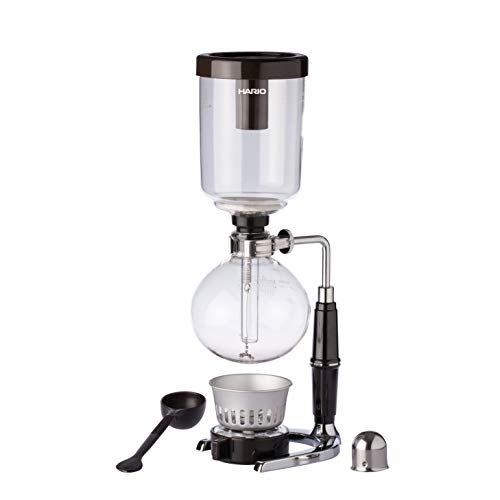
1. Hario Technica TCA-5
The Technica is the siphon most people picture, and for good reason: decades of refinement, a beautifully balanced glass body, a wooden handle, and a gentle spirit burner that makes it easy to control the brew. The cloth filter delivers the classic siphon cup — clean and articulate like a pour-over, but with more body and a rounder mouthfeel. It is the one I recommend to anyone serious about learning the method, and Hario's replacement glass is easy to find if you ever need it.
Heat: Alcohol burner | Capacity: 5-cup / 600 ml (about 3–4 mugs) | Filter: Reusable cloth | Best for: The definitive siphon experience
Check price on Amazon →
2. Bodum ePEBO Electric Vacuum Coffee Maker
If the open flame of a traditional siphon puts you off, the ePEBO is the answer. It plugs in, heats on its own base, and switches off automatically — all the vacuum-brew theatre with none of the fuss or fire risk. It uses a permanent filter (no cloth to babysit) and brews a full liter, making it the most practical siphon for a household and the easiest first vacuum pot. The cup is a touch heavier-bodied than a cloth-filtered classic, which many people love.
Heat: Electric base (no flame) | Capacity: Up to 8 cups / 1 L | Filter: Permanent | Best for: Easiest, safest siphon brewing
Check price on Amazon →
3. Yama Glass 5-Cup Stovetop Siphon
The clever thing about Yama's stovetop siphon is what it leaves out: the burner. It sits directly on a gas flame (or on a wire diffuser for electric and glass tops), so there is nothing extra to buy or refuel. The heavy borosilicate glass is well made, the cloth filter gives a proper siphon cup, and it is the most affordable honest way into the method. If you have a gas stove and a little patience, this is the smart-money pick.
Heat: Stovetop (gas, or diffuser for other hobs) | Capacity: 5-cup / 15 oz | Filter: Reusable cloth | Best for: Best siphon per dollar
Check price on Amazon →
4. Hario Next NXA-5
The Next is Hario's modern take on the Technica, and it fixes the classic's one weakness: stability. A wider, sturdier base and an integrated design make it far less tippy on the counter, so it is the one I would hand to someone nervous about knocking over hot glass. It brews the same excellent cloth-filtered cup as the Technica with a cleaner, more contemporary look. A great choice if you want the tradition without the fragility.
Heat: Alcohol burner | Capacity: 5-cup / 600 ml | Filter: Reusable cloth | Best for: A sturdier, modern classic
Check price on Amazon →
5. Yama Glass 5-Cup Tabletop Kit
If the drama is half the reason you want a siphon, this is the set to buy: Yama's tabletop siphon comes complete with its own stand and alcohol burner, so it stands proud on the counter and brews tableside with real ceremony. It is the one I would set up when guests are over — watching the coffee rise and fall never gets old, and the cup that lands is clean, sweet and full. A wonderful gift for a coffee lover, too.
Heat: Alcohol burner (stand included) | Capacity: 5-cup / 20 oz | Filter: Reusable cloth | Best for: Tableside ritual and gifting
Check price on Amazon →Which siphon should you choose?
Start with your comfort around heat. If you want the easiest, safest entry with no open flame, buy the Bodum ePEBO — plug it in and go. If you own a gas stove and want the most coffee for your money, the Yama Stovetop is the value champion. For the full traditional experience, the Hario Technica is the benchmark, and the Hario Next is the one to pick if you want that same cup in a sturdier, tip-resistant body.
And if the ritual is the whole point — brewing tableside for guests or buying a memorable gift — the Yama Tabletop Kit arrives ready to perform, stand and burner included. Whichever you choose, the cup rewards you the same way: cleaner than a French press, with more body and warmth than a pour-over.
How to brew a great siphon cup
Grind medium, a little coarser than for pour-over. Too fine and the siphon over-extracts and drags on the draw-down; medium is the sweet spot. Aim for roughly a 1:15 ratio — about 20 g of coffee to 300 g of water — and adjust to taste.
Prep the cloth filter properly. Rinse a new cloth filter and boil it briefly before first use to remove any sizing. Between brews, rinse it clean, then keep it damp in a sealed container in the fridge so it never dries out or turns sour. Replace it when it stops smelling neutral.
Stir gently, twice. Once when the water first rises and the grounds bloom, and again just before you pull the heat. Two light stirs even out the extraction without agitating the bed into bitterness.
Watch the draw-down. Cut the heat and let the vacuum pull the coffee down; a smooth 20 to 40 second draw is what you want. And as always, the grinder and the beans matter more than the brewer — fresh, evenly ground coffee is what turns a good siphon into a great cup.
A brewer this clean deserves a special coffee
Our Panama Geisha — jasmine, citrus and floral in the cup — is sourced directly from the producer in Panama and delivered worldwide in 5 days. The siphon's clarity shows off every note.
Shop Panama Geisha →A siphon is one piece of the specialty setup. To get the even grind it depends on, see our guide to the best coffee grinders; to weigh your dose and water, the best coffee scales. If you also brew by hand, compare drippers in our best pour-over coffee makers guide, and see how the siphon stacks up against every other method in our best coffee makers overview. Fancy the same full-immersion cup with far less ceremony? The best immersion coffee drippers, like the Hario Switch and Clever Dripper, steep the grounds just like a siphon and then simply drain through paper. Then dial it all in with our complete guide to brewing Panama Geisha at home.
Siphon coffee maker FAQ
How does a siphon coffee maker work?
Heat in the lower chamber creates vapor pressure that pushes water up into the upper chamber, where it brews with the grounds by full immersion. When you remove the heat, the lower chamber cools and the resulting vacuum draws the brewed coffee back down through a filter, leaving the grounds behind.
Does siphon coffee actually taste better?
It tastes distinctly different. Full immersion at a stable, high temperature gives a cup that is clean and aromatic like a pour-over but with more body and roundness. It especially flatters delicate, floral coffees like Panama Geisha. Whether it is "better" is personal, but few methods are more rewarding.
Are siphon coffee makers hard or dangerous to use?
They take a little practice but are not difficult. The main cautions are the open flame on burner models and the fragile glass. If that worries you, an electric siphon like the Bodum ePEBO removes the flame entirely and is very beginner-friendly.
Stovetop, alcohol burner or electric — which siphon is best?
Electric is easiest and safest, with no flame and automatic shut-off. Stovetop is cheapest since there is no burner to buy, but needs a gas hob or a diffuser. Alcohol burners are traditional and give a gentle, controllable heat, which is why the classic tabletop models use them.
What filter does a siphon use?
Most use a reusable cloth filter, which gives the signature clean-but-full body and must be kept damp and refrigerated between uses. Some models accept paper discs for less maintenance, and a few use a permanent metal screen for more body and no consumables.
As an Amazon Associate, Boquete Coffee Traders earns from qualifying purchases.