

Best Home Coffee Roasting Accessories (2026): 7 Tools That Fix the Roast
By Juan Carlos Sosa (@thecoffeejuan) | Boquete Coffee Traders
The best home coffee roasting accessories are not the roaster itself. They are the handful of tools around it that decide whether your roast tastes like the green coffee you paid for: a cooler that drops the beans to room temperature in two minutes instead of ten, a thermometer that tells you where first crack actually happened, and storage that keeps green coffee stable between sessions. Here are the seven pieces I would buy before upgrading the machine.
IN A HURRY? OUR TOP PICKS
- Best overall: QUSKLISU Electric Coffee Bean Cooler (1.3 lb) — two-layer mesh, pulls the chaff down, cools a full batch in a couple of minutes
- Best for big batches: XLTEAM 1000 g Coffee Bean Cooler — the step up if you roast 500 g or more at a time
- Best budget cooling: 40-Mesh Stainless Cooling Plate with Long Handle — no motor, no plug, works with a desk fan
- Best thermometer: ThermoPro TP-17 Dual Probe — two probes, so you can read bean mass and exhaust air at once
- Best for green coffee: 10-Layer Green Bean Grading Sieve Set — screens 12 to 21, the same sizes exporters use
- Best storage: Airscape Kilo Canister (2.2 lb) — the plunger lid pushes air out instead of sealing it in
- Best for resting and gifting: Wantpack Kraft Coffee Bags with Valve (8 oz, 100 pack) — one-way valve lets CO2 out while the roast rests
Best home coffee roasting accessories at a glance
| Accessory | Job | Capacity / spec | Best for | Price |
|---|---|---|---|---|
| QUSKLISU Electric Bean Cooler | Fan cooling + chaff separation | 1.3 lb (600 g), 110 V, two 304 steel meshes | Most air and small drum roasters | $$ |
| XLTEAM 1000 g Bean Cooler | Fan cooling, larger tray | Up to 1000 g, double-layer sieve | 500 g+ drum batches | $$$ |
| 40-Mesh Cooling Plate | Passive cooling / chaff | Stainless, long handle, no power | Popper and stovetop roasters | $ |
| ThermoPro TP-17 | Bean / air temperature | 2 probes, 14–572°F, timer, alarms | Anyone logging roast profiles | $ |
| 10-Layer Green Bean Grading Sieve | Screen-size sorting of green | Screens 12–21 (4.76–8.33 mm), 8 in, bottom tray | Buying green in bulk, uneven lots | $$ |
| Airscape Kilo Canister | Green or roasted storage | 2.2 lb (1 kg), plunger lid, 2-way valve | Open kilo bags of green coffee | $$ |
| Wantpack Kraft Bags with Valve | Resting, sharing, gifting roasted coffee | 8 oz, zipper, one-way valve, 100 pack | Roasting for friends or a market stall | $ |
Price guide: $ under ~$30 · $$ ~$30–70 · $$$ ~$70+
ON THIS PAGE
What actually matters in home coffee roasting accessories
Every home roaster I know went through the same arc: buy the machine, roast a few batches that taste flat or baked, blame the machine. In most cases the machine was fine. Three things around it were not.
Cooling speed. Roasting does not stop when you cut the heat. Beans at 200°C carry enough stored energy to keep developing for several minutes, and a slow cool pushes a light roast into medium and flattens the acidity you were chasing. Commercial roasters drop beans into a stirred, fan-cooled tray and get them to room temperature in under four minutes. At home, the built-in cool cycle on most air roasters takes eight to twelve minutes, and a colander on the balcony is at the mercy of the weather. An external cooler with a fan fixes this for the price of a bag of good green coffee.
Knowing your temperatures. The thermometer built into a home roaster usually reads chamber air, not bean mass, and on a popcorn popper you have nothing at all. If you want to repeat the roast you liked last week, you need a probe you can place in the beans and a second one for the exhaust, so you can log a real profile and hit first crack at the same point every time.
Green coffee handling. Green coffee is stable for months if it stays cool, dry and away from strong smells, and it roasts far more evenly if the beans are the same size. Exporters grade coffee by screen size for exactly that reason; a 10-layer sieve set brings the same step home. Storage that keeps air and humidity out matters even more in a tropical climate like ours in Panama.
The seven picks in detail

1. QUSKLISU Electric Coffee Bean Cooler (1.3 lb)
This is the accessory that changes the cup the most. A 34 W fan under a double-layer 304 stainless mesh pulls air down through the beans, so a 600 g batch goes from roaster temperature to cool enough to bag in one to three minutes. Stir with a wooden spoon while it runs and the chaff drops through the top screen into the fine mesh below, which is a real gift if you roast natural-process Panama lots that shed a lot of skin. It is quiet, it has a simple on-off switch and nothing to calibrate, and the two meshes lift out for cleaning. Capacity matches a Fresh Roast SR800 extension tube or a 500 g drum batch with room to spare.
Capacity: 1.3 lb / 600 g | Power: 110 V, 34 W | Best for: air roasters and small drum roasters up to 500 g
Check price on Amazon →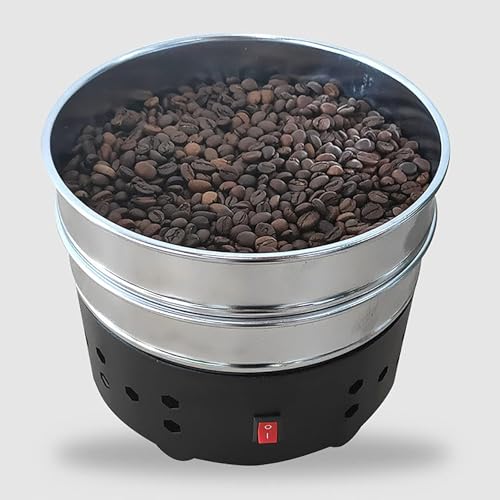
2. XLTEAM 1000 g Coffee Bean Cooler
Same idea as the pick above, scaled up. The tray takes a full kilo of roasted coffee, the fan is sized to match, and the double-layer sieve does the same chaff separation. If you have moved to a 500 g or 1 kg drum roaster, or you roast for a few families at once, the smaller coolers force you to cool in two shifts, and the second half of the batch keeps cooking while it waits. This one takes the whole drum in one pour. It is heavier and takes more counter space, so only buy it if you actually roast at that scale.
Capacity: 1000 g | Build: 304 stainless, double-layer sieve | Best for: 500 g to 1 kg drum roasters, small-batch sellers
Check price on Amazon →
3. 40-Mesh Stainless Cooling Plate with Long Handle
No motor, no plug, nothing to break. This is a shallow stainless pan with a 40-mesh screen bottom and a long handle, so you can tip hot beans straight out of a popcorn popper or a stovetop pan, hold it in front of a desk fan and shake. The fine mesh holds even small peaberries and lets the chaff fall through. It is what I would hand to anyone roasting on a popper or a cast-iron pan who is not ready to spend on an electric cooler. The limit is batch size and your patience: it works for 150 to 250 g, and you are the fan controller.
Material: stainless steel, 40 mesh | Power: none | Best for: popcorn-popper, pan and small air-roaster batches
Check price on Amazon →
4. ThermoPro TP-17 Dual Probe Digital Thermometer
It is sold as a barbecue thermometer, and that is exactly why it works for roasting: the probes and braided cables are rated to 716°F, the unit reads from 14 to 572°F, and you get two probes on one screen. Thread one into the bean mass through a vent or the extension tube and clip the other at the exhaust, set a high alarm a few degrees under where you expect first crack, and you can log a real profile with a notebook and the built-in timer. The magnet on the back sticks it to the side of a drum roaster. For the price of two bags of coffee it turns guesswork into something you can repeat.
Probes: 2, rated to 716°F | Range: 14–572°F | Best for: popper, drum and air roasters without a bean probe
Check price on Amazon →
5. 10-Layer Green Bean Grading Sieve Set (Screens 12–21)
When a Boquete exporter grades a lot, the beans go over a stack of screens numbered 12 to 21 (that is 4.76 to 8.33 mm), and what stays on each screen is sold as that size. Even bean size is why a good lot roasts evenly. This 8-inch stainless set gives you the same ten screens with a bottom tray. Pour in a few hundred grams of green, shake, and you can roast the 17/18 fraction and the 15/16 fraction as separate batches instead of fighting a roast where the big beans are still yellow when the small ones crack. It also tells you quickly whether the green you bought is the grade you were promised.
Screens: 10 (12–21 mesh) | Diameter: 8 in, stainless, with bottom tray | Best for: anyone buying green coffee by the kilo
Check price on Amazon →
6. Airscape Kilo Coffee Canister (2.2 lb)
Most "airtight" canisters seal the air in with the coffee. The Airscape lid is a plunger with a one-way valve: you press it down onto the beans, the air leaves, and the valve stays shut. The Kilo size holds 2.2 lb, which is the size most of our green coffee is sold in and the size most home roasters buy. I use it for green: once a bag is opened in a humid climate, this is the difference between beans that roast the same in month three as they did in week one and beans that go dull. It works just as well for a week's roasted coffee. Steel body, hand wash, no batteries, and it will outlast the roaster.
Capacity: 2.2 lb / 1 kg | Lid: plunger with 2-way valve | Best for: opened kilo bags of green, bulk roasted coffee
Check price on Amazon →
7. Wantpack Kraft Coffee Bags with Degassing Valve (8 oz, 100 pack)
Fresh roasted coffee gives off CO2 for days. Put it in a sealed jar and the pressure builds; leave it open and it stales. A bag with a one-way valve lets the gas out and no air in, which is how every roastery rests its coffee, and it is the right place for a batch to sit for the two to five days before it is ready to brew. These are high-barrier kraft stand-up pouches with a zipper, a pull tab and a valve, in the 8 oz size that suits a home batch. They are also the easiest way to give your roasts to friends, or to sell a few bags at a weekend market, and they look the part. One pack lasts most home roasters a year.
Size: 8 oz / 227 g, 100 bags | Features: one-way valve, zipper, heat-sealable | Best for: resting roasted coffee, sharing and gifting
Check price on Amazon →Which should you buy first?
If you own an air roaster or a small drum roaster and your roasts taste flatter than the green deserves, buy the QUSKLISU cooler first. Nothing else on this list will change the cup as much for the money.
If you roast on a popcorn popper or a pan, start with the 40-mesh cooling plate and the ThermoPro TP-17. Together they cost less than a bag of Geisha and give you fast cooling and a real bean temperature.
If you roast 500 g or more per batch, skip straight to the XLTEAM 1000 g cooler.
If you buy green coffee by the kilo, the Airscape Kilo protects the investment and the grading sieve set makes every batch of it roast more evenly. The valve bags are the last piece, once you are roasting more than you drink.
Roasting tips from the source
- Cool fast, then rest slow. Get the beans to room temperature in under four minutes, then let the roast rest in a valve bag for two to five days before you judge it. Panama coffees in particular open up on day three.
- Log bean temperature at first crack and the time it happened, every roast. After five roasts you will see your own pattern and start steering it.
- Weigh green in and roasted out. A 12 to 14 percent weight loss is a light roast, 15 to 17 percent is medium. It is a more honest guide than color.
- Sort before you roast. Screen the green and roast size fractions separately, or at least pull the obvious defects by hand. Even beans, even roast.
- Store green cool, dry and away from smells. Green coffee is porous. Keep it out of the kitchen cupboard with the spices and the cleaning products, and in our climate keep it sealed.
- Start with forgiving green. A washed Caturra or Catuai from Boquete is easier to roast well than a Geisha, and it teaches you the same things.
Roast Panama green coffee at home
Our green coffee — Geisha, Caturra, Catuai and more from the Boquete and Volcán highlands — is sourced directly from the producer in Panama and delivered worldwide in 5 days via FedEx or DHL. Request a free quote by the kilo.
Shop Panama Green Coffee →Still choosing the machine? Our guide to the best home coffee roasters compares air and drum machines, and how to buy green coffee beans covers grades, processing and what to ask a seller. Once the coffee is roasted and rested, our best coffee storage canisters roundup and the best coffee scales guide cover the rest of the bench, and the coffee grind size chart will get your own roast dialed in for brewing.
FAQ: home coffee roasting accessories
Do I really need a separate coffee bean cooler?
If your roaster's built-in cool cycle takes more than four or five minutes, yes. Beans keep developing after the heat is cut, and slow cooling pushes a light roast darker and flattens acidity. An external fan cooler brings a batch to room temperature in one to three minutes and also separates chaff.
What thermometer works for home coffee roasting?
A dual-probe digital barbecue thermometer such as the ThermoPro TP-17 works well. Its probes are rated well above roasting temperatures, and two probes let you read bean mass and exhaust air at the same time so you can log a repeatable profile.
How should I store green coffee beans at home?
Cool, dry, dark and away from strong smells. In a dry climate a sealed bag in a cupboard is enough; in a humid one, a canister that removes air, like the Airscape Kilo, keeps green coffee stable for many months after the bag is opened.
Why sort green coffee by screen size before roasting?
Beans of different sizes roast at different rates. Screening the green into size fractions and roasting them separately gives a more even roast and lets you see whether the lot you bought matches the grade you were sold.
How long should roasted coffee rest before brewing?
Two to five days in a bag with a one-way valve, which lets the CO2 out without letting air in. Most Panama coffees taste best from day three to day fourteen after roasting.
As an Amazon Associate, Boquete Coffee Traders earns from qualifying purchases.